The Door Close Button Delusion: America's Most Beloved Lie
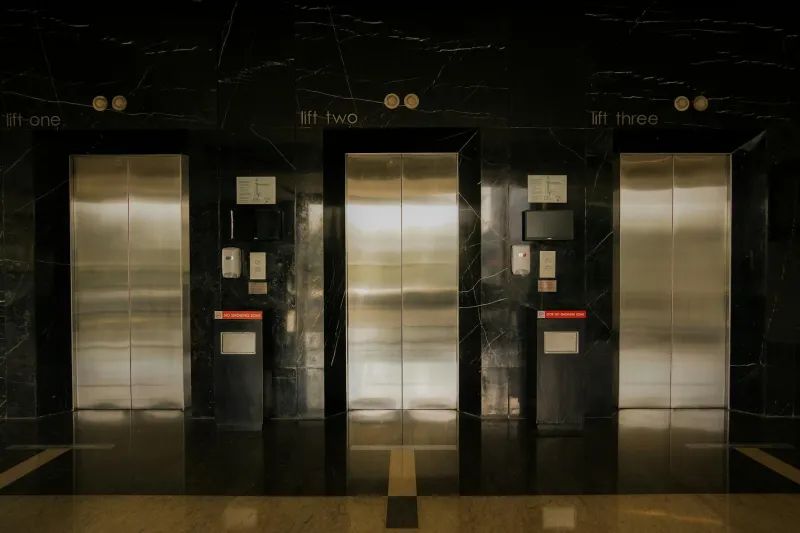
The Daily Ritual
Every morning, in office buildings across America, the same sacred ritual unfolds. You step into an elevator, select your floor, and then—with the confidence of someone who definitely knows what they're doing—you press the door close button.
Not once. Multiple times. Because clearly, the elevator didn't hear you the first time.
You press it with the kind of determination usually reserved for emergency situations, even though you're just trying to get to the third floor to attend a meeting about quarterly reports. This button press isn't just functional; it's emotional. It's your small act of rebellion against the universe's timeline.
The Illusion of Control
Here's what you know, deep in your logical brain: that button probably doesn't do anything. In most modern elevators installed after 1990, the door close button is either completely disconnected or programmed to work only with a special key that maintenance workers carry.
Here's what you choose to believe anyway: that button is your direct line to elevator efficiency. You are the master of vertical transportation. You have harnessed the power of mechanical engineering through the simple application of finger pressure.
The cognitive dissonance is spectacular, and you're completely comfortable with it.
The Performance
Watch someone press the door close button, and you're witnessing performance art. There's a specific technique involved. It's not just a casual press—it's a deliberate, confident jab that communicates to everyone else in the elevator that you are a person who gets things done.
Some people press it once and wait, projecting an air of patient authority. Others employ the rapid-fire approach, pressing it multiple times in quick succession like they're sending Morse code to the elevator gods. There are those who press and hold, as if applying sustained pressure will somehow override the elevator's programming through sheer force of will.
Each approach reflects a different philosophy of life, but they all share the same beautiful, stubborn optimism.
The Awkward Moments
Of course, there are consequences to this ritual. You press the button with complete confidence, then watch in slow-motion horror as someone appears in the hallway, clearly intending to catch the elevator. The doors continue their predetermined closing sequence, completely ignoring your frantic button pressing.
Now you're faced with a social dilemma. Do you acknowledge that your button pressing was ineffective? Do you shrug apologetically? Do you pretend you didn't see them?
Most people choose option four: press the door open button frantically while making exaggerated "sorry" faces, as if the elevator's timing was a personal betrayal rather than a predictable mechanical function.
The Loyalty
The most remarkable thing about the door close button relationship is its durability. Decades of evidence that the button doesn't work haven't diminished America's faith in it. If anything, we've doubled down.
We've all been in elevators where someone presses the button, nothing happens, and then someone else immediately presses the same button, as if the elevator was just waiting for the right person to ask. It's like we believe the button is sentient and has personal preferences.
This isn't stupidity; it's hope. It's the same hope that makes us buy lottery tickets and believe that this time, our favorite sports team won't break our hearts.
The Philosophical Implications
The door close button represents something profound about the American spirit. We are a nation of people who refuse to accept that some things are beyond our control. We will press buttons that don't work, we will take "shortcuts" that are actually longer, and we will continue to believe that our individual actions can somehow bend the universe to our will.
In a world full of actual problems—climate change, political dysfunction, the fact that hot dogs come in packs of ten but buns come in packs of eight—we've chosen to invest our energy in the door close button. And honestly? That's kind of beautiful.
The Real Purpose
Maybe the door close button isn't about closing doors at all. Maybe it's about giving us something to do with our hands during those awkward elevator moments. Maybe it's about providing the illusion of agency in a world where most things happen to us rather than because of us.
Maybe pressing that button is our way of saying, "I am here, I have preferences, and I refuse to be a passive participant in my own vertical transportation experience."
The Acceptance
The truth is, we all know the button doesn't work. We've known for years. But we press it anyway, because sometimes the act of trying is more important than the result. Sometimes believing in something useless is exactly what we need to get through another Tuesday morning in corporate America.
So go ahead, press that door close button. Press it with confidence. Press it with style. Press it like you mean it. Because in a world full of things we can't control, at least we can control how enthusiastically we press buttons that don't work.
And when the doors close at exactly the same speed they always do, completely independent of your button pressing, you can smile knowing that you participated in one of America's most enduring collective delusions.
That's exactly what happens, and we wouldn't have it any other way.