The Empty Tank Olympics: Why Americans Turn Fuel Warnings Into Extreme Sports
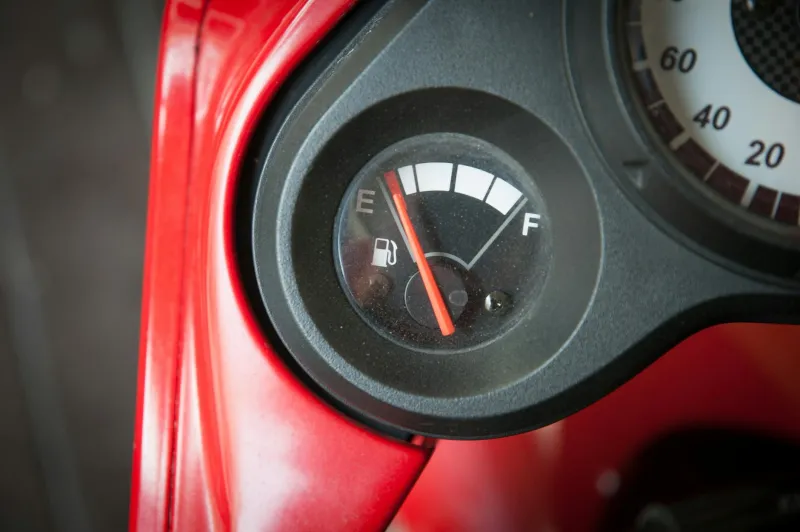
The Warning Light: Nature's Starting Pistol
The moment that little orange fuel symbol illuminates your dashboard, something primal awakens in your brain. Normal people might think, "Oh, I should probably get gas soon." But you? You see that light and immediately begin calculating just how much further you can push this mechanical relationship before it ends in roadside humiliation.
It's not even about money anymore. Gas stations are literally everywhere in America. You probably passed three on your way to wherever you're going right now. But there's something deeply satisfying about seeing how close you can flirt with disaster while maintaining the illusion of control.
The Mental Mathematics of Denial
Your brain immediately shifts into advanced rationalization mode. "The light just came on, so I've probably got at least thirty miles." This calculation is based on absolutely nothing except the vague memory of one time when you made it fifteen miles past empty, which somehow translates to thirty miles of guaranteed range in your current situation.
You start doing gas station math that would make your high school algebra teacher weep. "If I skip this expensive station and drive three miles to the cheaper one, I'll save maybe forty cents, assuming I don't run out of gas and need a tow truck that costs $150." The logic is bulletproof, obviously.
The gauge needle is now resting comfortably below the E, but you've convinced yourself that there's a secret reserve tank that car manufacturers install just for situations like this. There isn't, but hope is a powerful drug.
The Strategic Station Passing
Now begins the most dangerous part of the game: actively driving past gas stations while running on fumes and pure optimism. You see a perfectly good Shell station and think, "Nah, I bet there's a cheaper one up ahead." This decision is made with the confidence of someone who definitely hasn't been in this exact situation before and sworn they'd never do it again.
You pass a second station. "That one looked sketchy anyway." The third station is at a weird angle that would require a slightly inconvenient left turn, so obviously that's not an option either. You're not running out of gas; you're just being selective about your petroleum purchasing experience.
By the fourth station, you've entered what psychologists probably call the "sunk cost fallacy of fuel management." You've already passed so many stations that stopping now would feel like admitting defeat. You're committed to this journey now, wherever it leads.
The Negotiation Phase
Your car starts making subtle suggestions that maybe this wasn't the best plan. The engine hesitates for just a split second at a red light. Was that a sputter, or did you imagine it? You definitely imagined it. Cars don't actually sputter anymore; this isn't 1987.
You begin negotiating with your vehicle like it's a sentient being capable of understanding your predicament. "Come on, baby, just get me to that station near my house. You've done harder things than this." You're literally talking to a machine, but somehow this feels like a reasonable strategy.
The GPS cheerfully announces that your destination is still eight miles away, blissfully unaware that it might be witnessing your automotive downfall in real-time. You wonder if AAA covers poor life choices or just actual emergencies.
The Panic Proximity Paradox
The closer you get to your intended destination, the more anxious you become. It's like some cruel mathematical equation where your stress level increases exponentially as your fuel level approaches absolute zero. You're simultaneously more confident ("I'm almost there!") and more terrified ("What if I don't make it?") with each mile.
You start driving like you're transporting nitroglycerin, accelerating gently and taking turns like you're in a driver's education video. Every hill becomes Mount Everest. Every red light becomes a potential death sentence for your engine.
Other drivers probably think you're having some kind of medical emergency based on your suddenly conservative driving style. Little do they know you're just a person who thought they could outsmart basic automotive physics.
The Victory Lap or Walk of Shame
Two outcomes await your fuel gambling adventure. Either you roll into that gas station with your engine running on literal fumes and the satisfaction of someone who just won a very stupid lottery, or you're calling someone to bring you a gas can while sitting in a parking lot somewhere, questioning every decision that led to this moment.
If you make it, you'll pump gas with the smug satisfaction of someone who just proved that warning lights are really more like suggestions. You'll tell this story to anyone who'll listen, conveniently forgetting the twenty minutes of genuine panic you just experienced.
If you don't make it, you'll swear this is the last time you'll ever let your tank get this low. You'll mean it too, right up until the next time that orange light comes on and your brain immediately starts calculating how far you can push it.
The Eternal Cycle
The beautiful thing about the gas tank gamble is that success breeds overconfidence and failure breeds temporary wisdom that fades surprisingly quickly. Whether you win or lose, you'll absolutely do this again within the month.
Because somewhere deep in the American psyche lives the unshakeable belief that we can negotiate with physics, outsmart basic mathematics, and turn routine maintenance into an extreme sport.
And honestly? Sometimes we're right. But mostly, we're just lucky.
The gas light comes on again next week, and the cycle begins anew. Because apparently, some lessons can only be learned over and over again, preferably while driving on empty through suburban America at 9 PM on a Sunday when half the gas stations are mysteriously closed.
That's just how we roll. Literally.