Free Bread at a Restaurant: The Moment Your Entire Meal Plan Legally Ceased to Exist
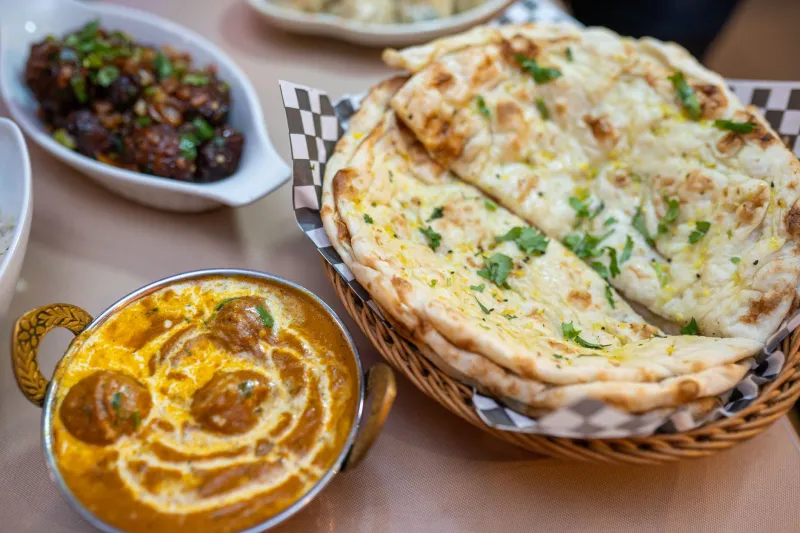
You came to this restaurant with intentions. A salad, maybe. Something with protein. You were going to be measured, sensible, the kind of person who reads the menu instead of just pointing at something. Then the bread basket arrived, warm and completely free of charge, and every single one of those intentions evaporated like steam off a dinner roll.
This is not a failure of willpower. This is physics. Warm bread placed in front of a human being creates a gravitational field that overrides higher-order reasoning. Scientists have not studied this, but they should.
The Arrival: A Moment of Pure Possibility
The bread basket lands on the table with the quiet ceremony of something that costs nothing and therefore carries infinite psychological value. The server says enjoy and disappears before you can ask any follow-up questions, like whether the butter is salted or how many of these you're actually allowed to have.
You look at the basket. Your dining companion looks at the basket. There is a brief, wordless negotiation that takes approximately 0.4 seconds and ends with both of you reaching in simultaneously.
The bread is warm. Of course it's warm. It's always warm at the exact moment it arrives, which is the only moment that matters. You will spend the rest of the meal chasing this warmth and failing. But right now, in this moment, it is perfect. It is the best thing you have ever eaten. You have not yet looked at the menu and you already know this is the peak of the meal.
The Internal Negotiation: A Masterwork of Self-Deception
You eat the first piece with the controlled pace of someone who is absolutely not going to eat the whole basket. This is a taste. A small preview. An amuse-bouche for the actual meal you have come here to eat.
You eat a second piece while reading the menu, which counts as multitasking and therefore barely registers calorically.
The third piece is where the internal negotiation gets serious. I should save room, you think, while buttering the third piece. I'll just finish this one and then I'll stop, you think, reaching for the fourth. These are actually pretty small, you think, which is not true but is the kind of thought that arrives precisely when you need it to.
The basket is now empty. You did not decide to eat the whole basket. It simply became empty while you were thinking about other things.
The Second Basket: A Crime Nobody Committed
Here is the thing about the second basket: nobody ordered it. You didn't flag down the server and say we're going to need more bread. Your dining companion didn't either. It just appeared, the way free bread always appears, as if the restaurant has sensors that detect an empty basket and dispatches a replacement before anyone has to experience the discomfort of asking.
You look at the second basket. You have a genuine internal debate that lasts approximately three seconds before you take a piece, because the alternative — not taking a piece of free warm bread that is sitting directly in front of you — is not something your brain is capable of processing as a real option.
The second basket has a different energy. The first basket was optimistic. The second basket is an acknowledgment. You are not saving room. You have not been saving room since approximately ninety seconds after you sat down. The meal you planned has been quietly replaced by the meal that is actually happening, and these are two very different meals.
The Entree Arrives: A Meeting Between Who You Were and Who You Are Now
The server sets down your entree. It looks beautiful. It is exactly what you ordered, prepared exactly as described, and you look at it with the expression of a person who has just run a 5K and is being handed a trophy for a race they forgot they entered.
You are full. Not full full — you have not achieved the physiological limit. But you have achieved bread full, which is its own distinct state of being that sits somewhere between satisfied and regret. You are in the carbohydrate ceiling. The entree is real and present and you are going to eat it, but the relationship has changed. You are no longer hungry in the way you were when you ordered it. You are eating it now as a matter of principle.
You eat about two-thirds of it. You ask for a box. The server asks if you saved room for dessert.
The Dessert Menu: A Formality Everyone Understands
You look at the dessert menu. You always look at the dessert menu. Looking at the dessert menu is free, same as the bread, and you have established tonight that free things are your primary weakness.
The tiramisu sounds incredible. The molten chocolate cake sounds like a medical event you would enjoy. You close the menu and say I think I'm good, thank you, which is the correct answer and also the saddest sentence in the English language when spoken in the presence of a molten chocolate cake.
You leave the restaurant carrying a to-go box containing two-thirds of a perfectly good entree, having spent approximately forty percent of your dining time eating bread that cost you nothing and delivered everything.
You are already thinking about where you're going next week.
You hope they have bread.