Hotel Room Climate Control: The Greatest Placebo Effect in American Hospitality
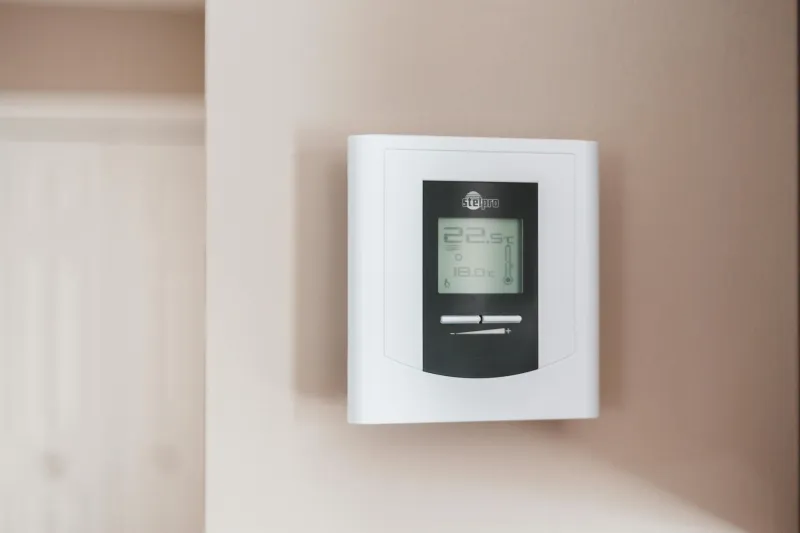
The Ritual of False Hope
You walk into your hotel room, and after the obligatory bed bounce test and bathroom inspection, you approach the thermostat with the confidence of someone who definitely knows how these things work. The room is currently set to what can only be described as "surface of Venus," so you confidently adjust it to a reasonable 72 degrees.
The digital display changes. You feel accomplished. You've solved the problem through decisive action and modern technology.
That feeling lasts exactly until you realize the room temperature has not changed even slightly, and in fact, might have gotten warmer out of spite.
The Escalation Protocol
This is when Phase Two begins: the aggressive recalibration. You don't just adjust the temperature—you conduct a full investigation. You try 68 degrees. Then 65. Then you go rogue and set it to 60, because surely the machine will respond to such dramatic input.
The thermostat accepts your commands with the enthusiasm of a DMV employee. The display updates dutifully. The numbers change. The room temperature remains as fixed as the laws of physics, which, inside hotel rooms, apparently don't apply to HVAC systems.
You start pressing buttons with increasing aggression. Fan speed: HIGH. Mode: COOL. AUTO: ON. You cycle through every possible combination like you're trying to crack a safe, convinced that the right sequence will unlock the secret to basic human comfort.
The Architectural Investigation
Frustrated by the thermostat's complete indifference to your needs, you begin a forensic examination of the room's climate infrastructure. You locate the actual air conditioning unit, which is usually positioned with the strategic accessibility of a nuclear reactor core.
The unit itself appears to be from the Carter administration. It makes sounds that suggest it's not so much cooling air as it is grinding ancient gears and possibly summoning spirits from another dimension. You try the manual controls, which respond with the same mocking indifference as the wall thermostat.
This is when you discover that hotel air conditioning units exist in only two states: "Off" and "Arctic Blast That Could Flash-Freeze a Mammoth." There is no middle setting. The concept of "comfortable" is apparently a myth perpetuated by the hospitality industry.
The Blanket Architecture Phase
By hour three of your stay, you've accepted that traditional climate control is a lie and begun constructing elaborate blanket configurations to create microclimates within your room. You're using pillows as insulation barriers and arranging furniture to redirect the occasional arctic blast away from your sleeping area.
You've become a climate engineer, designing solutions that would impress NASA while cursing the fact that you paid money to live like you're camping in a fancy tent.
The hotel has provided you with exactly one thin sheet and a comforter that's either designed for polar expeditions or made from tissue paper—there's never an in-between option that matches the actual weather outside.
The 3 AM Rebellion
This is when the hotel room climate reaches its final form: a temperature that defies all logic and human biology. You're simultaneously too hot and too cold, lying on top of the covers while wearing a hoodie, contemplating whether hypothermia and heat stroke can occur simultaneously.
You get up and approach the thermostat one final time, not because you think it will work, but because you need to express your frustration to something, even if it's an inanimate object that has clearly been programmed to torture you.
You set it to 85 degrees in a desperate attempt to reverse psychology the system into cooling down. The display cheerfully updates to 85. The room remains exactly the same temperature it's been for the past six hours.
The Psychological Experiment Theory
The truth becomes clear: hotel thermostats aren't broken—they're working exactly as designed. They're elaborate psychological experiments disguised as climate control devices. The hotel industry has discovered that guests need the illusion of control more than actual comfort.
The thermostat serves the same function as a steering wheel in a child's car seat: it gives you something to do while the real controls are operated by forces beyond your understanding. Somewhere in the hotel's basement, a facilities manager is adjusting the actual temperature controls while laughing at the guests frantically pressing buttons in their rooms.
The digital display isn't connected to anything except your hopes and dreams. It's a participation trophy for trying to influence your environment in a space specifically designed to remind you that you have no power here.
The Acceptance Stage
By checkout time, you've reached a zen-like acceptance of your powerlessness. You've learned to sleep in whatever climate the hotel gods have deemed appropriate. You've mastered the art of wearing winter clothes in summer and summer clothes in winter, depending on which way the cosmic dice rolled for your particular room.
You leave feedback about the temperature control, knowing full well that the next guest will go through the exact same ritual of false hope, aggressive button-pressing, and eventual surrender.
Because that's exactly what happens in every hotel room in America. The thermostat is a shared delusion we all participate in, pressing buttons with the same energy we use to hit elevator buttons multiple times, knowing it won't help but unable to stop ourselves from trying.
And somehow, we're all surprised every single time when it doesn't work.