The Two-Second Panic Attack: When Your Greeting Goes Catastrophically Wrong
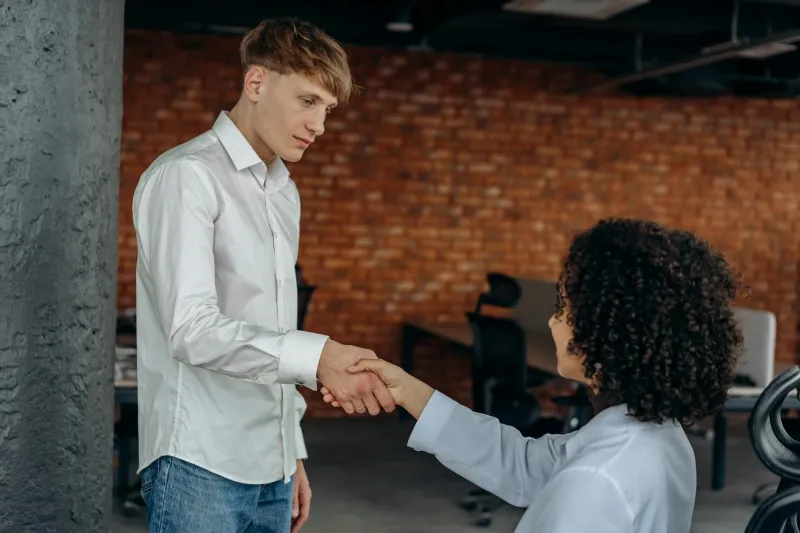
The Approach Vector
You see them coming. It's someone you know well enough to greet but not well enough to have established a consistent greeting protocol. Your brain immediately begins running calculations that would make NASA jealous.
Distance: approximately twelve feet and closing. Relationship status: work acquaintance/gym buddy/neighbor's cousin. Last greeting method: unclear, possibly a wave? Current social context: professional/casual/pandemic-influenced? Time to decision: 3.2 seconds and counting.
Your nervous system is treating this like a hostage negotiation.
The False Start Symphony
You both begin the approach. There's that moment of mutual recognition, followed by the simultaneous lean-in that immediately reveals you've chosen different greeting styles.
You're going for a handshake. They're clearly in hug mode.
You see the mistake happening in slow motion, but you're both already committed to your respective movements. It's like watching two trains approach each other on the same track, except the trains are your reputations and the track is basic human interaction.
You try to course-correct mid-approach. They try to course-correct mid-approach.
Now you're both doing some kind of interpretive dance that looks like you're practicing CPR on each other.
The Hybrid Disaster
In a moment of panic, you both attempt to meet in the middle. This creates what sociologists call "The Greeting Hybrid" – a half-handshake, half-hug monstrosity that satisfies no one and confuses everyone within viewing distance.
Your hand is somehow trapped between your bodies. Their arm is around your shoulder, but only one shoulder, creating an asymmetrical embrace that feels like you're being arrested very politely.
You're both making that face – the smile that says "this is fine" while your eyes scream "how do we end this?"
The greeting lasts approximately four seconds, which is roughly three and a half seconds longer than any greeting should last.
The Post-Pandemic Plot Twist
Ever since 2020, greeting anxiety has reached unprecedented levels. We've all developed greeting PTSD. The simple act of saying hello now requires a PhD in social dynamics and a minor in epidemiology.
You approach someone and immediately begin the internal debate:
- Are we still doing elbow bumps?
- Is handshaking back?
- Are they a hugger or a non-hugger?
- What's their vaccination status?
- What's MY vaccination status?
- Is this outdoor enough for a hug?
- Why is greeting someone more complicated than filing taxes?
So you do the thing where you kind of hover in the middle distance, waiting for them to make the first move. Except they're doing the exact same thing. Now you're both standing there like you're playing the world's most awkward game of chicken.
The Overcommitter
There's always that one person who commits way too hard to their chosen greeting style. They've decided this is a hug situation, and by God, you're getting hugged whether you like it or not.
They come in hot with full arm extension and zero regard for your personal space preferences. You were clearly preparing for a handshake – your hand is literally extended – but they've already enveloped you in what can only be described as a greeting assault.
Now you're trapped in someone else's hug while your hand is still sticking out like you're trying to hail a cab from inside their embrace.
The Fist Bump Fumble
Someone suggests a fist bump as a compromise. This seems reasonable until you realize that fist bumps have their own complex social protocol that nobody taught you.
Do you explode it at the end? Do you just bump and retreat? Is there supposed to be eye contact? Are you supposed to make the explosion sound effect?
You attempt the bump. They attempt the bump. Your knuckles collide with the structural integrity of two wet paper towels. Somehow, you both miss each other's fists entirely and end up bumping forearms like you're comparing arm wrestling techniques.
Then they do the explosion thing with their fingers, but you're not ready for it, so you just stand there watching them jazz-hand at you while you wonder if you're supposed to jazz-hand back.
The Wave Miscommunication
You think you're being smart by choosing the wave. Safe distance, clear intention, minimal physical contact required.
Except they interpret your wave as the beginning of a more complex greeting sequence. They wave back, then start walking toward you like the wave was just the opening ceremony.
Now you're backing away while still waving, which makes you look like you're either scared of them or practicing for a parade float.
The Recovery Attempt
Both parties realize the greeting has gone horribly wrong. Now you have to decide: Do you acknowledge the awkwardness or pretend it didn't happen?
You both choose acknowledgment, which somehow makes it worse.
"Sorry, I thought you were going for a–"
"No, no, I was trying to–"
"Should we try again?"
"Yeah, let's try again."
The second attempt is always worse than the first. Now you're both overthinking it. You're greeting each other like you're defusing a bomb. Every movement is deliberate and terrifying.
The Lingering Trauma
The conversation proceeds normally, but both of you are still thinking about the greeting disaster. You're having a perfectly pleasant chat about the weather while internally replaying those two seconds of social catastrophe on an endless loop.
You're wondering if they think you're weird now. They're wondering if you think they're weird now. You're both wondering if other people witnessed the greeting malfunction and are now judging your basic human interaction skills.
The worst part is that you have to end this conversation eventually, which means you'll need to navigate a goodbye. Do you risk another greeting disaster? Do you just slowly back away while maintaining eye contact? Do you fake a phone call?
The Universal Greeting Truth
Here's the thing nobody wants to admit: There is no universal greeting that works in all situations. Every greeting is a gamble. You're constantly reading social cues, cultural contexts, relationship dynamics, and pandemic protocols, all while trying to appear like a normal person who knows how to interact with other humans.
We've all been there. We've all extended our hand for a handshake while someone was clearly going in for a hug. We've all committed to a fist bump that the other person wasn't ready for. We've all waved at someone who was actually waving at the person behind us.
The greeting malfunction is a shared human experience that unites us all in our fundamental awkwardness. It's proof that even the most basic social interactions are somehow impossibly complicated when you really think about them.
And tomorrow, you'll see that same person again, and you'll both remember the greeting disaster, and you'll both overthink the next one, and it will probably go wrong in a completely different way.