The Checkout Bagging Sprint: A Structural Engineering Exam You Are Taking Under Live Surveillance
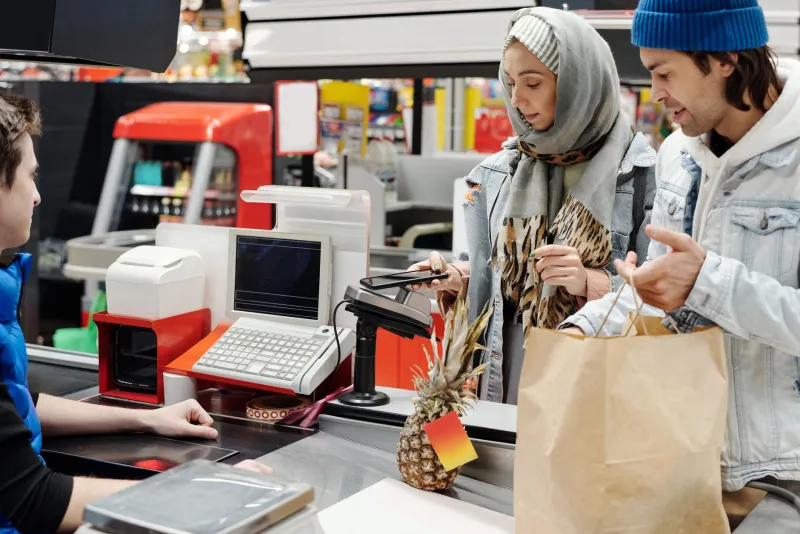
Nobody warned you that grocery shopping would end like this. You spent twenty minutes walking the aisles with reasonable calm, making selections, comparing unit prices like a functioning adult. It was going fine. And then you arrived at the checkout lane, placed your items on the belt with what felt like adequate spacing, and the cashier looked at your cart and shifted into a gear that should not be physically available to a human being.
The scanning began. Items moved. The little beep started firing like a metronome set to anxiety. And now you are standing at the end of the belt, holding a reusable bag in one hand, your wallet in the other, watching a frozen lasagna, a bag of grapes, a loaf of bread, a dozen eggs, and a bottle of olive oil arrive in the bagging area simultaneously, with no plan, no system, and approximately four seconds before the next wave hits.
This is not a shopping trip anymore. This is a timed event.
Oh, that happens.
The Impossible Math of Seventeen Items and Two Bags
At some point in recent history, the reusable bag became the standard unit of American grocery transport. This was a reasonable development. What was not accounted for was the structural physics problem it introduced at checkout.
A plastic bag has give. A plastic bag can be overfilled in ways that are inadvisable but technically functional. A reusable bag is a rigid moral commitment to a specific volume, and it will not negotiate. You have two of them. You have seventeen items of wildly varying size, weight, and fragility. The olive oil cannot go on top of the bread. The grapes cannot go under the lasagna. The eggs are a separate category that requires their own geopolitical zone of protection.
None of this is possible to calculate in real time while the cashier is still scanning, while you are also locating your credit card, while the person behind you has already placed their items on the belt and is watching your organizational process with an expression that is professionally neutral but emotionally impatient.
You start putting things in the bag. You are not thinking about weight distribution. You are thinking about speed. These are incompatible goals.
The Bread Event
It always happens to the bread. Out of every item in your cart, the bread is the one that ends up at the bottom. Not because you intended to put it there. Not because you are someone who disrespects bread. But because the bread arrived on the belt first, got placed in the bag first, and by the time the canned goods showed up, the decision had already been made by circumstance rather than by you.
You know it's wrong. You can see it happening. You put the soup can in and feel the slight compression and think: I'll repack at the car. You always think: I'll repack at the car.
The bread is going to be fine, you tell yourself, which is the same thing people say about situations that are not going to be fine.
The Payment Timing Paradox
At some point during the bagging sprint, the machine needs you to pay. This would be a reasonable request if it weren't happening simultaneously with the structural engineering problem. But the payment screen does not care that you are mid-bag. It does not wait. It presents its prompts with the cheerful urgency of a quiz show buzzer, and now you must tap your card, confirm the amount, decline the rewards card offer, decline the donation prompt, confirm you do not want cash back, and select your receipt preference — all while a bag of frozen peas is sitting in the bagging area with nowhere to go because your hands are occupied.
This is the checkout paradox: the machine wants your full attention and your hands, and the bagging situation also wants your full attention and your hands, and the line behind you wants you to have already completed both of these things several seconds ago.
You develop a one-handed bagging technique in real time. It is not good. It is the technique of someone who is doing their best under conditions they did not agree to.
The Cashier Who Has Seen Things
The cashier, to their credit, has watched this exact performance approximately four hundred times this week and has developed the serene detachment of someone who has made peace with the chaos they generate. They are not slowing down. Slowing down is not an option. They have a line. They have a quota. They have seen people drop entire bags of oranges and they kept scanning.
Occasionally a cashier will ask "do you need another bag?" This question arrives at the exact moment when the answer is yes but accepting the bag would require stopping the current bagging process, shaking out a new bag, and integrating it into the system — which takes ten seconds you do not have. So you say "no, I'm good" and immediately regret it as a second frozen lasagna appears on the belt.
The Parking Lot Repack
The walk to the car is the walk of someone who knows what must be done. The bags are in the cart. The bread is in the bag. The eggs are in a position that you are choosing not to examine until you reach the car, because there is nothing you can do about it in transit and optimism is all you have.
You open the trunk. You look at the bags. You begin the repack.
This is the version you should have done at the checkout. This is the weight-distributed, fragility-respecting, bread-on-top arrangement that you had in your head the entire time but could not execute under the surveillance of a growing line and a cashier operating at inhuman velocity.
It takes ninety seconds. It would have taken ninety seconds at the register. But at the register, ninety seconds is a public performance. In the parking lot, it is a private correction.
The bread is a little compressed. The eggs survived. You drove home.
Next time, you think, you'll be faster. Next time you'll have a system.
You will not be faster. There is no system. The cashier will always be faster than you.
Oh, that happens.