The Audience Effect: How One Passenger in Your Car Turns You Into Someone Who Has Never Parked Before
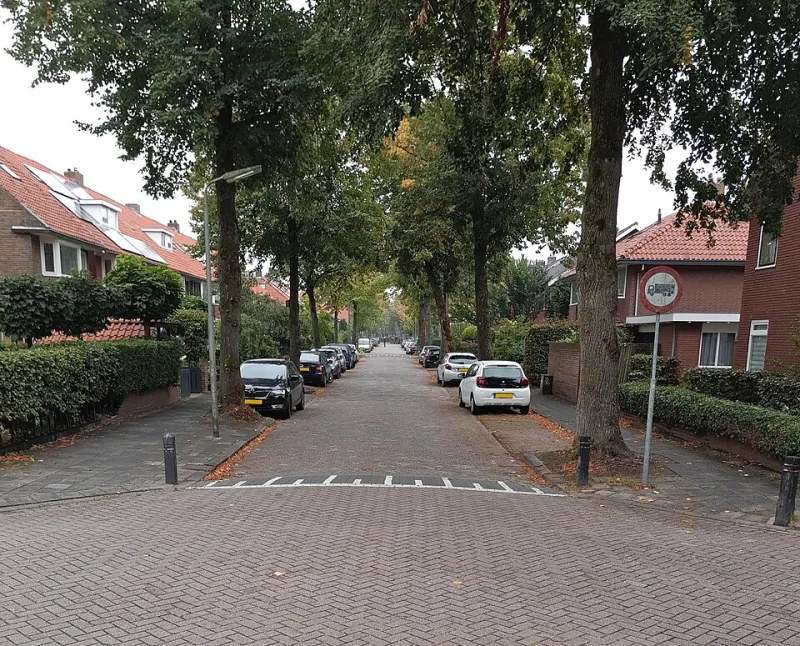
Photo: Jeroen Hoek, CC0, via Wikimedia Commons
Let's establish something right away: you know how to parallel park. You passed your driver's test. You've done it on busy streets, in tight spots, in the rain, while mildly distracted by a podcast. On a good day, you can slide into a space with one smooth, confident arc and feel genuinely proud of yourself for approximately four seconds before moving on with your life.
But add one person to the passenger seat — one single human witness — and suddenly you are a brand new driver who has never encountered a curb before.
Oh, that happens.
The Moment You Spot the Space
It starts with hope. You see an open spot on the street. It's a generous space — honestly, it's almost too easy, the kind of spot you'd describe to a friend later as "basically a parking lot." Under normal solo conditions, you'd back in without a second thought.
But your passenger sees it too. They make a small sound of encouragement. Maybe they say, "Oh, perfect, right there." And something inside you short-circuits.
You signal. You pull up alongside the car ahead of the space. You begin to reverse. And then — immediately, without any warning — your hands forget what they are supposed to do. The wheel turns the wrong direction. You correct. You overcorrect. The car drifts at an angle that suggests you are trying to park in a completely different space two blocks away.
You pull forward. You try again.
The Internal Monologue Spiral
This is where it gets loud inside your head. Because parallel parking, when performed in front of an audience, stops being a physical task and becomes a negotiation between you and every anxious thought you have ever had.
Okay. Turn the wheel. No, the other way. Wait — am I too close? I'm too close. Pull forward a little. How much is a little? Too much. That was too much. Check the mirror. Which mirror? Both mirrors. Is the car behind me closer than it was? It looks closer. It's probably not closer. It might be closer.
Meanwhile, your passenger is doing absolutely nothing wrong. They are sitting quietly. They are looking at their phone, or out the window, or at nothing in particular. They have not said a word. They are being completely, genuinely fine.
But you can feel them. You can feel their awareness of every inch of movement. You can feel the seconds accumulating. You are now on attempt three, and the car is somehow at a more confusing angle than when you started, and you are beginning to wonder if you should just offer to drop them off here and circle the block indefinitely.
The Silent Passenger Is the Worst Passenger
There are two types of passengers in this situation, and neither of them actually helps.
The first type offers guidance. "You've got room, you've got room — okay, stop, stop, STOP." This is unhelpful because now you are also managing their commentary while trying to navigate three dimensions of space with a two-ton vehicle.
The second type says nothing at all. This is somehow worse. The silence is enormous. It has texture. It fills the entire car. Every small adjustment you make happens inside that silence, and you are acutely aware that they are watching you fail in real time and choosing, out of kindness or horror, not to comment.
You do not want their commentary. You do not want their silence. You want them to briefly cease to exist while you sort this out.
Attempt Five: A New Low
You are now at a completely perpendicular angle to the curb. This is not a parking attempt anymore. This is abstract art. A passing pedestrian glances over. A car behind you waits. Your passenger shifts in their seat, not impatiently, just — they shifted. That's enough.
You pull all the way out and start over from the beginning. Fresh approach. Clear mind. You can do this.
And somehow — somehow — on this attempt, you nail it. One smooth motion. Centered in the space. Exactly the right distance from the curb. You put the car in park.
You do not say anything. You don't want to draw attention to the fact that it took six tries. You simply turn off the engine with the energy of someone who parks like this every single time.
The Parking Lot Epilogue
Two hours later, you drop your passenger off at their door and drive away. On the very next block, without thinking, you parallel park into a space roughly the size of a standard envelope. First try. Flawless. Effortless.
You sit there for a moment.
The car is empty. No one saw it. It meant nothing.
This is exactly how it works.